
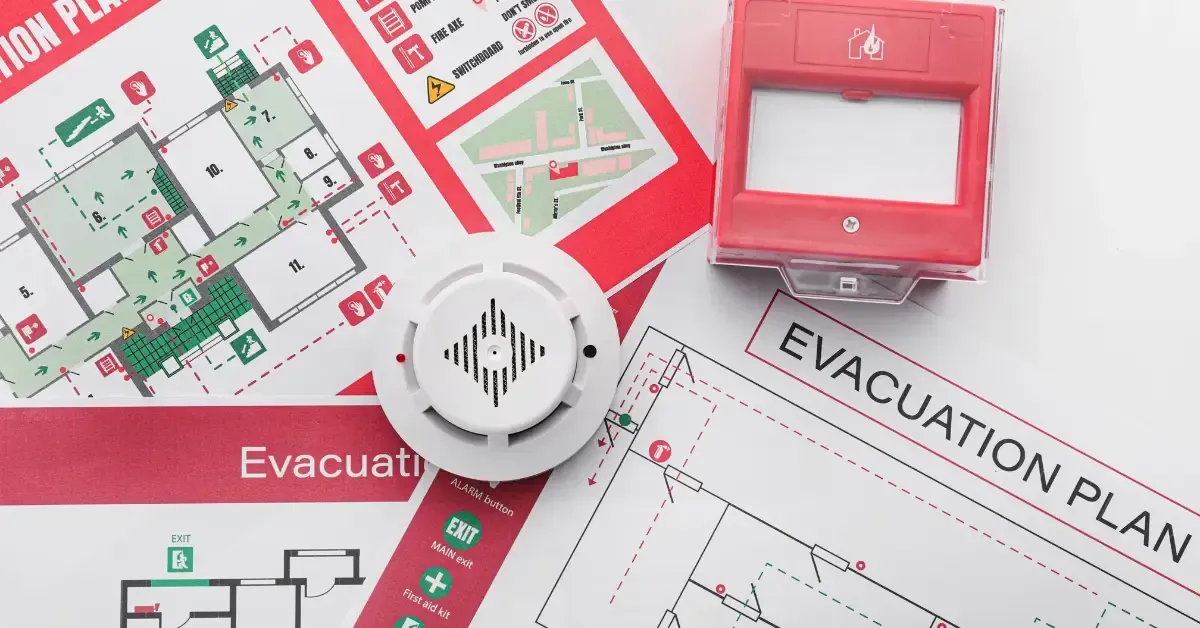
Good Question Series: Are OSHA Emergency Evacuation Plan Requirements the Same as Those With the Fire Marshal?
Intended Audience: Building Owners, Managers, Compliance, Human Resource & Safety Personnel.
Short Answer:
No, they are not precisely the same as OSHS requirements focus on employee safety while the Fire Marshal takes a broader approach with overall public safety.
OSHA Standards Versus The Fire Code:
The OSHA regulation that addresses building emergency evacuation plan requirements is 30CFR 1910.34(c).
The Fire Code regulation that primarily covers building evacuations enforced by the Fire Marshal is NFPA 101, The Life Safety Code, Chapter 4, General.
Average Building Evacuation Plans Regulatory Penalties:
OSHA = $1,340 per violation
Fire Marshal = No average penalty data could be found, but such fines can range from as low as $20 for a minor violation to as much as $5,000 per major violation, depending on the jurisdiction.
OSHA Regulations Versus the Fire Code (NFPA 101)
OSHA 1910.38:
Regulatory Emphasis is on emergency procedures & worker safety.
Plan Format is not specified by OSHA.
Regulatory Plan Approval by OSHS is not required.
Plan Posting is not required by OSHA.
Building Diagram showing evacuation routes is not required.
Employee Training is required with new hires & annually thereafter.
Plan Updating is on an as-needed basis.
NFPA 101 (The Life Safety Code)
Regulatory Emphasis is on life safety and fire protection.
Plan Format is not standardized under the Life Safety Code.
Regulatory Plan Approval may be required by the local fire marshal.
Plan Posting may be required for certain occupancies like hospitals.
Building Diagram is required for certain occupancies.
Employee Training is required initially and periodically thereafter.
Plan Updating is required with any condition changes.
Best Practices for Emergency Evacuation Plans:
The plan should be written so as to be simple & easy to understand.
It should focus on the most likely perils for the area like fire, flood & storm.
Diagrams should be checked for accuracy & proper viewer orientation.
Employees & their backups with emergency roles need to be trained.
Emergency evacuation drills need to be conducted at least semiannually.
Emergency communication methods should be tested periodically.
Ensure that all exit routes and doors are fire code compliant.
The plan should address how to evacuate people with mobility issues.
Place plan copies at strategic locations like the employee bulletin board.
Key Takeaway:
An emergency evacuation plan should be treated as the most important safety document for the building so that every occupant knows what to do in case of an emergency.
About the Author:
Rob Brooks is the Loss Control Manager for Centurion Insurance Services in Charleston, West Virginia. He has over 40-years experience in his profession having worked for some of the leading insurance carriers and brokers. Rob has professional certifications in both human resource management (CHRS) and workers compensation (CWCP) from Michigan State University’s School of Human Resources & Labor Relations. Rob can be reached at [email protected] or (606)434-0739.
Disclaimer:
This publication is intended for general educational purposes only, and not to be considered as business, financial or legal advice. Centurion Insurance Services and the writer makes no guarantees or warranties of any kind, express or implied, about the reliability, completeness or suitability of the information contained herein. Readers should consult with appropriate professionals before making any decisions based on the content of this newsletter. We will not be liable for any losses or damages arising from the use of the information provided.
