
5-Minute Guide on OSHA Compliance Guide: Top 10 OSHA Violations with Pallet Jacks
Intended Audience: Business Owners, Managers, Supervisors, Organizational Safety & Compliance Professionals.
Definition of a Pallet Jack:
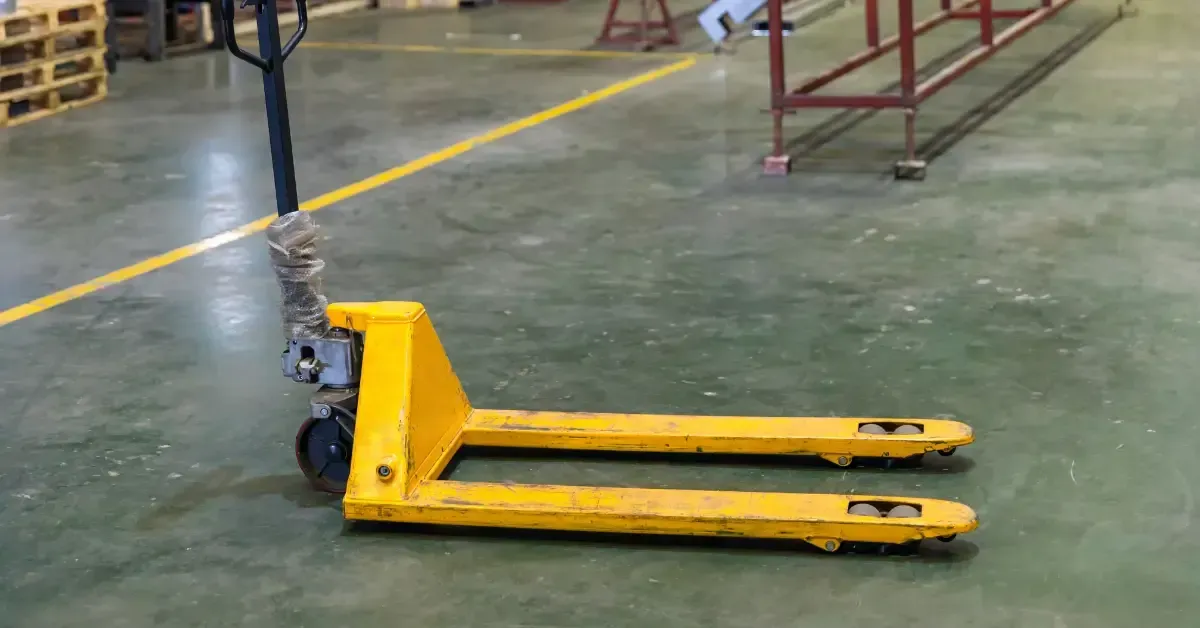
In its simplest and most common form a pallet jack is a material handling device that uses forks to slide under palletized loads so that they can be moved short distances with the load being deposited on a flat floor.
The most commonly used pallet jacks are either electrical or manual powered and operated by a worker using controls normally located on the rear of the machine.
Pallet jacks are frequently used in warehouses, distribution centers, big box stores, industrial facilities and construction sites.
Other names for pallet jacks include; pallet lifters, pallet movers, pallet trollies walkie lifters and hand trucks.
Unlike forklifts, pallet jacks cannot lift loads to place on shelving.
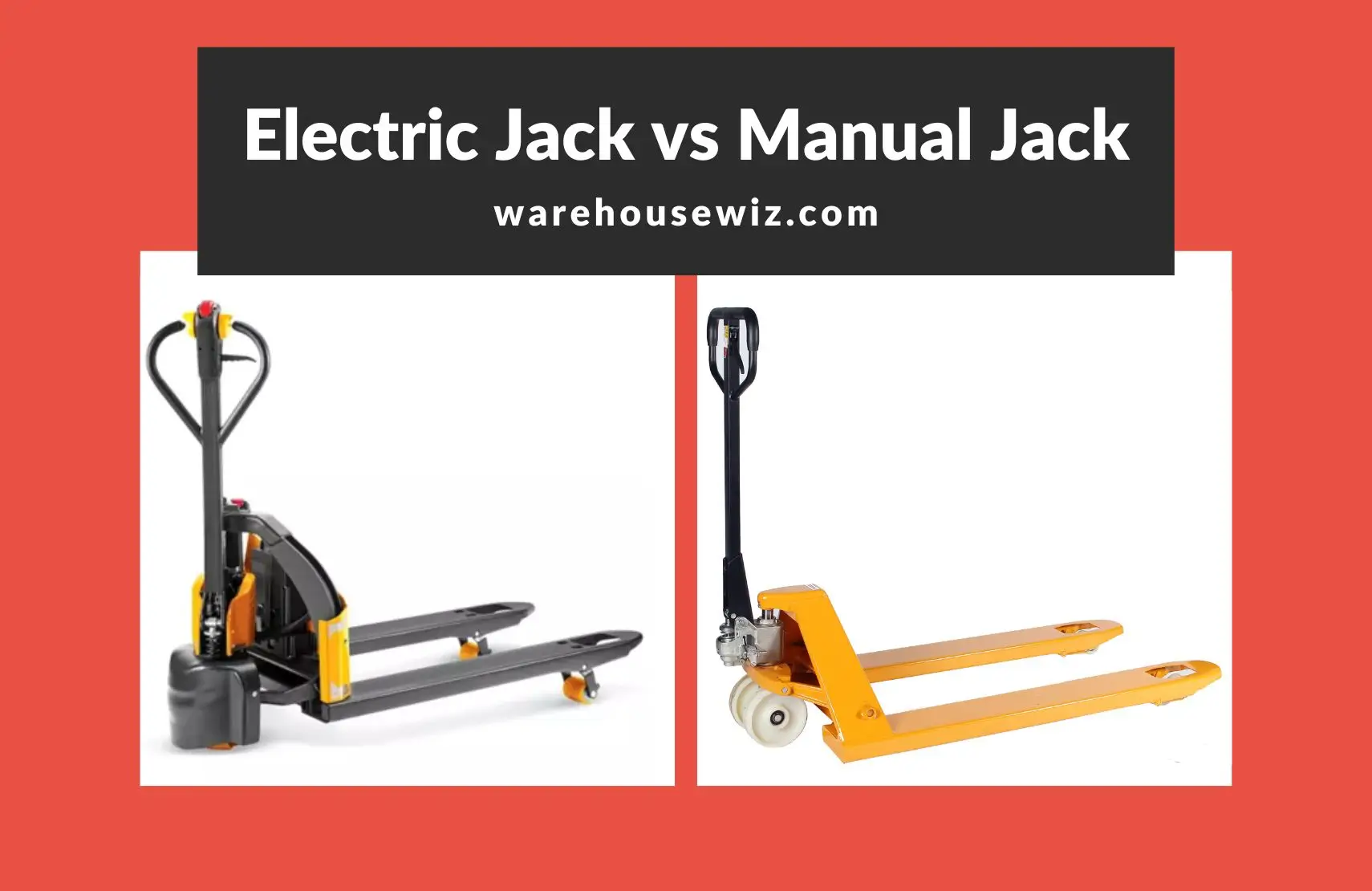
Electric version on the left & manual type on the right.
Pallet Jack Data:
There are an estimated 190,000 electrical pallet jacks operating nationwide.
There is no estimate of the number of manually operated pallet jacks as there is no central registry for such devices, however it is assumed in be in the hundreds of thousands.
The maximum lifting capacity of a manual pallet jack is usually around 5,000lbs, with some larger electrical models capable of lifting up to 10,000lbs.
The average lifting height of a pallet jack is around 6 to 8-inches, or enough to provide the load with a small amount of ground clearance.
The use of electrical pallet jacks results in an average of 3 to 4-workplace fatalities and more than 1,400 injuries annually.
Why Pallet Jacks Can Be a Better Alternative Than Forklifts:
Lower pallet jack acquisition & upkeep cost.
Easier to store pallet jacks for extended periods when not needed.
No need for fuel or charging stations.
Easier to operate and with less breakdown potential.
Less operator training & certification requirements.
Easier & safer for small & short load moves.
Can work in tight spaces such as narrow isles or room corners.
Pallet jacks are quiet & don’t generate noxious fumes.
OSHS Compliance with Pallet Jacks:
OSHA classifies pallet jacks under the broad category of “powered industrial trucks’ under their Standard 1910.178.
Unlike forklifts, OSHA does not require a formal certification process for pallet jack operators.
However, under OSHA’s General Duty Clause, employers must still provide pallet jack operator training.
According to OSHA Standards, the training of pallet jack operators must be documented and those records kept on file for up to 3-years.
Refresher training must be conducted after an accident or near-miss event, whenever unsafe operation is observed, or there are changes in the equipment or working environment.
Consensus Standards with Pallet Jack Training:
A manual pallet jack operator can be competently trained in about 30-minutes.
An electrical pallet jack operator will take around 2-hours to train to a competent level.
It is a recommended best practice to retrain pallet jack operators for 10 to 20-minutes, every 2 to 3 years.
Top-10 OSHA Pallet Jack Violations:
1. Inadequate Operator Training -
Employers failing to provide model-specific training.
Failure to conduct both formal & hands-on training.
Operators not trained before initially using equipment.
Operators not retrained under certain conditions.
2. Failure to Conduct Refresher Training & Evaluation -
Operators not given refresher training at least once every 3-years.
Not providing operator retraining after accidents & unsafe behavior.
3. Missing or Inadequate Operator Certification -
No documentation that operators have completed retirement training.
The documentation is missing or incomplete.
4. Unsafe Operational Practices -
Unsafe operator conduct such as speeding.
Improper load handling.
Endangering pedestrians while operating the pallet jack.
Unsafe operations due to the lack of safety equipment.
5. Failure to Perform Daily Inspections -
Before use, not conduct the required pre-shift inspections.
Improperly documented daily inspections.
6. Operating Defective or Unsafe Equipment -
Damaged equipment like worn tires, broken forks or hydraulic leaks.
Not taking defective equipment out of service.
Not properly repairing damaged equipment.
7. Lack of Safety Controls for Pedestrian Workers -
Improperly marked areas such as pedestrian isles or warning signs.
Inadequate separation distance between pedestrians & pallet jack paths.
8. Poor Practices with Load Handling -
Overloading, unstable loads or improper loading.
Operators not trained on correct loading & handling.
9. Inadequate or Unsafe Workplace Conditions -
Cluttered aisles.
Inadequate lighting.
Obstacles in pallet jack paths.
10. No or Inadequate Personal Protective Equipment (PPE) -
Not ensuring operators wearing proper PPE such as hard hats.
Worker near pallet jacks does not wear proper PPE such as reflective clothing.
Key Takeaway:
Most accidents with pallet jacks can be attributed to the lack training caused by management & operator complacency.
About the Author:
Rob Brooks is the Loss Control Manager for Centurion Insurance Services in Charleston, West Virginia. He has over 40-years experience in his profession having worked for some of the leading insurance carriers and brokers. Rob has professional certifications in both human resource management (CHRS) and workers compensation (CWCP) from Michigan State University’s School of Human Resources & Labor Relations.
Disclaimer:
This publication is intended for general educational purposes only, and not to be considered as business, financial or legal advice. Centurion Insurance Services and the writer makes no guarantees or warranties of any kind, express or implied, about the reliability, completeness or suitability of the information contained herein. Readers should consult with appropriate professionals before making any decisions based on the content of this newsletter. We will not be liable for any losses or damages arising from the use of the information provided.
